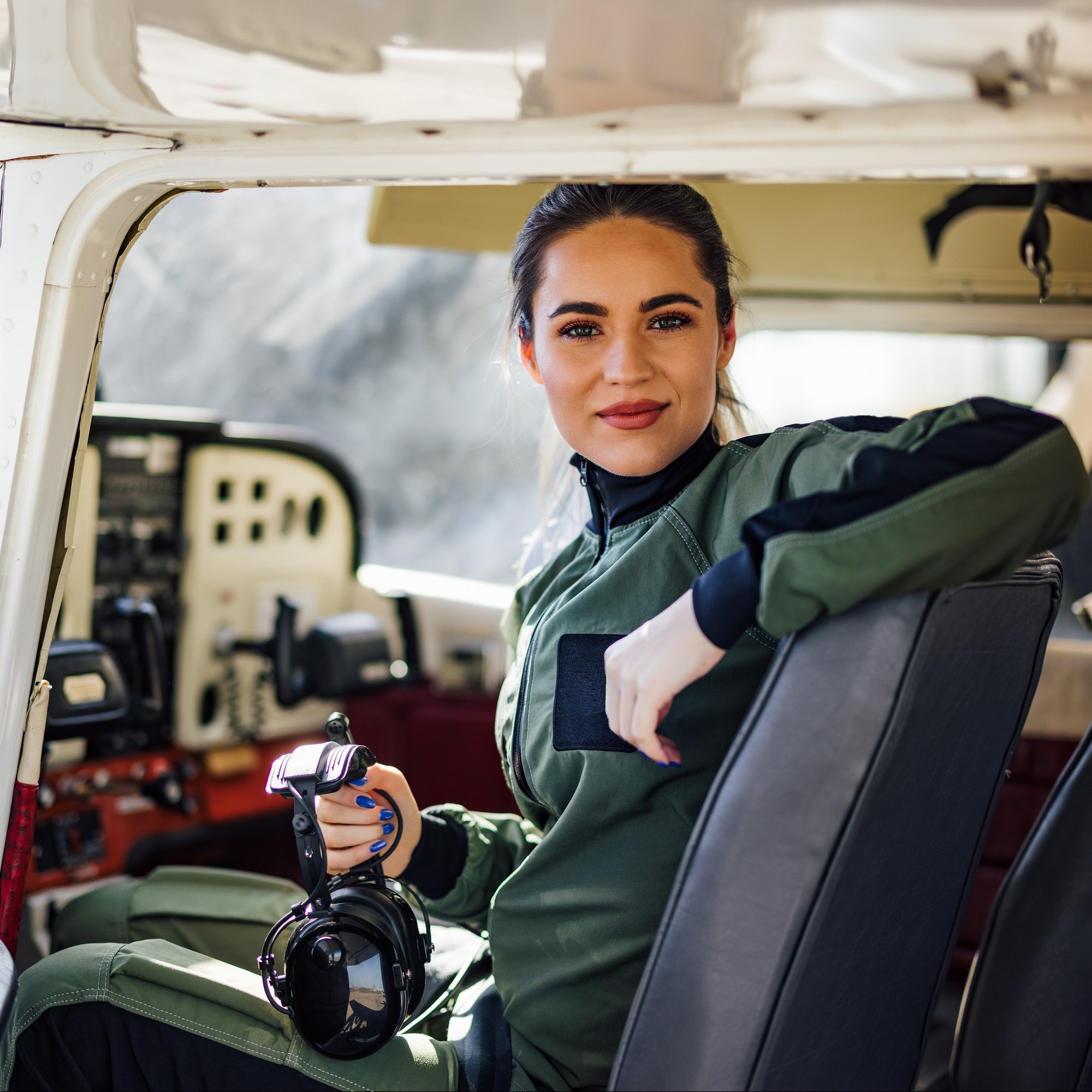
So, you're wondering how much flying lessons cost? Let's cut straight to the chase. For a one-off taster lesson to see if you've got the bug, you're looking at somewhere between £100 and £250. If you're serious about getting your wings, a full Private Pilot's Licence (PPL) will typically set you back between £9,000 and £14,000.
Of course, the final figure depends on a few things, like the type of plane you're flying and where you're learning.
Your Quick Guide to Flying Lesson Costs
Getting into the cockpit for the first time starts with understanding the investment. Whether you're just after a bit of a thrill or you're dead set on earning that licence, the costs are pretty easy to break down. Think of it like learning to drive – you can have a single taster session or commit to the full course to get your licence.
For most people, a trial flight is the perfect starting point. It’s an introductory experience designed to give you a real feel for being at the controls, all without any long-term commitment. It’s the best way to find out if flying is really for you before you go all in.
On the other hand, if your goal is that PPL, you're signing up for a proper training programme. This involves a minimum number of flight hours, plenty of ground school theory, and a series of exams. The total cost reflects the entire journey to becoming a fully qualified private pilot.
Estimated Flying Lesson Costs at a Glance
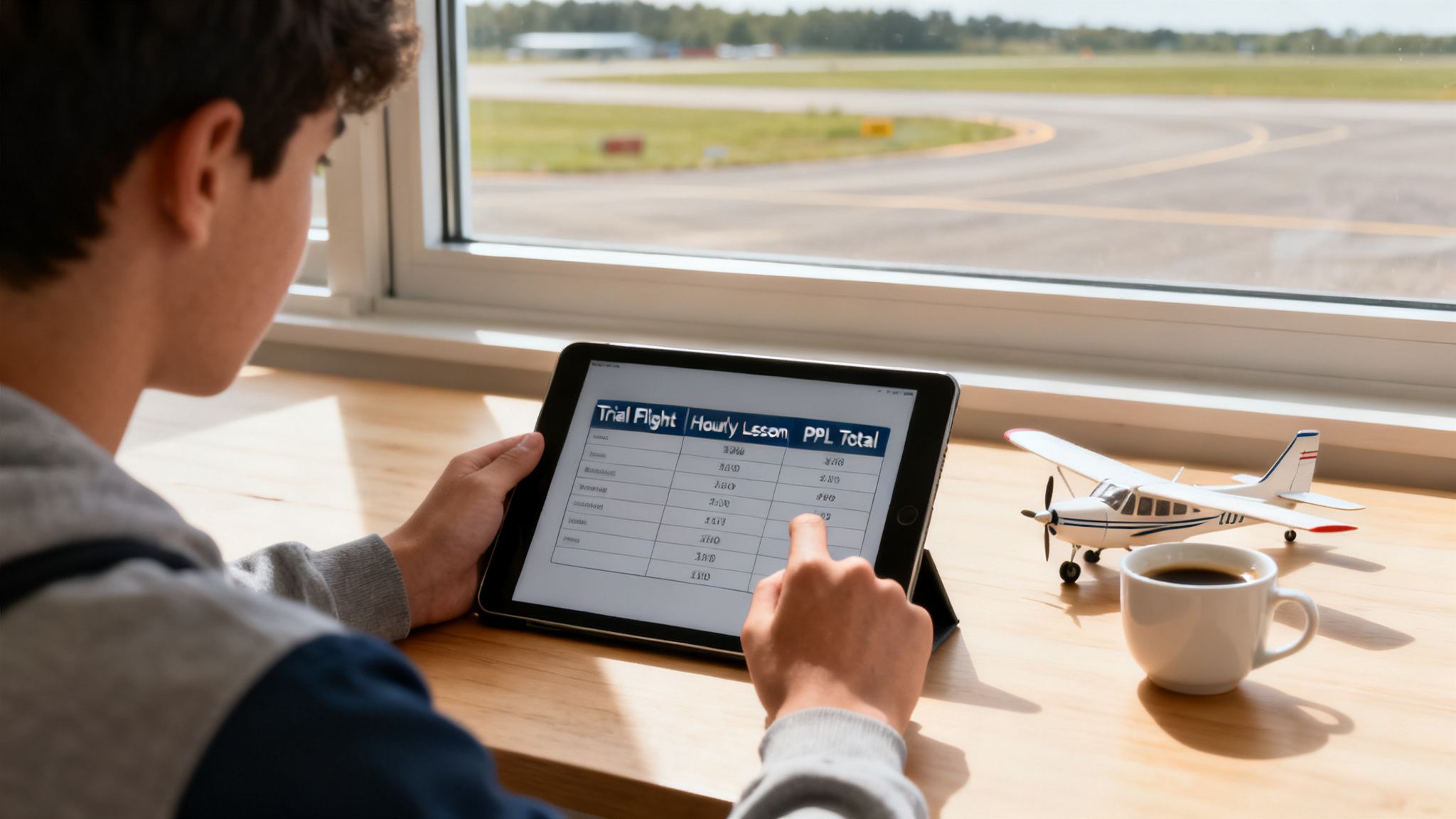
To give you a clearer picture, here’s a simple breakdown of what you can expect to pay for different types of flying lessons here in the UK. Think of this table as a handy guide to match your high-flying ambitions with a realistic budget.
| Type of Flying Lesson | Typical Duration | Estimated Cost Range |
|---|---|---|
| Trial Flight Experience | 30 - 60 Minutes | £100 - £250 |
| Pay-As-You-Go Lesson | 60 Minutes (per hour) | £180 - £300 |
| Private Pilot's Licence (PPL) | 45+ Hours (full course) | £9,000 - £14,000+ |
These numbers give you a solid baseline to start planning. Whether you're thinking of buying a truly unforgettable gift or investing in a life-changing new skill, knowing the price spectrum is your first pre-flight check.
You can find a fantastic selection of introductory flying lessons perfect for dipping your toes in the water. For a deeper dive into aviation resources and training services, you might also check out the flycraft website.
Stick with us, and we'll break down exactly what makes up these costs and why they can vary.
Deconstructing the Price of a Flying Lesson
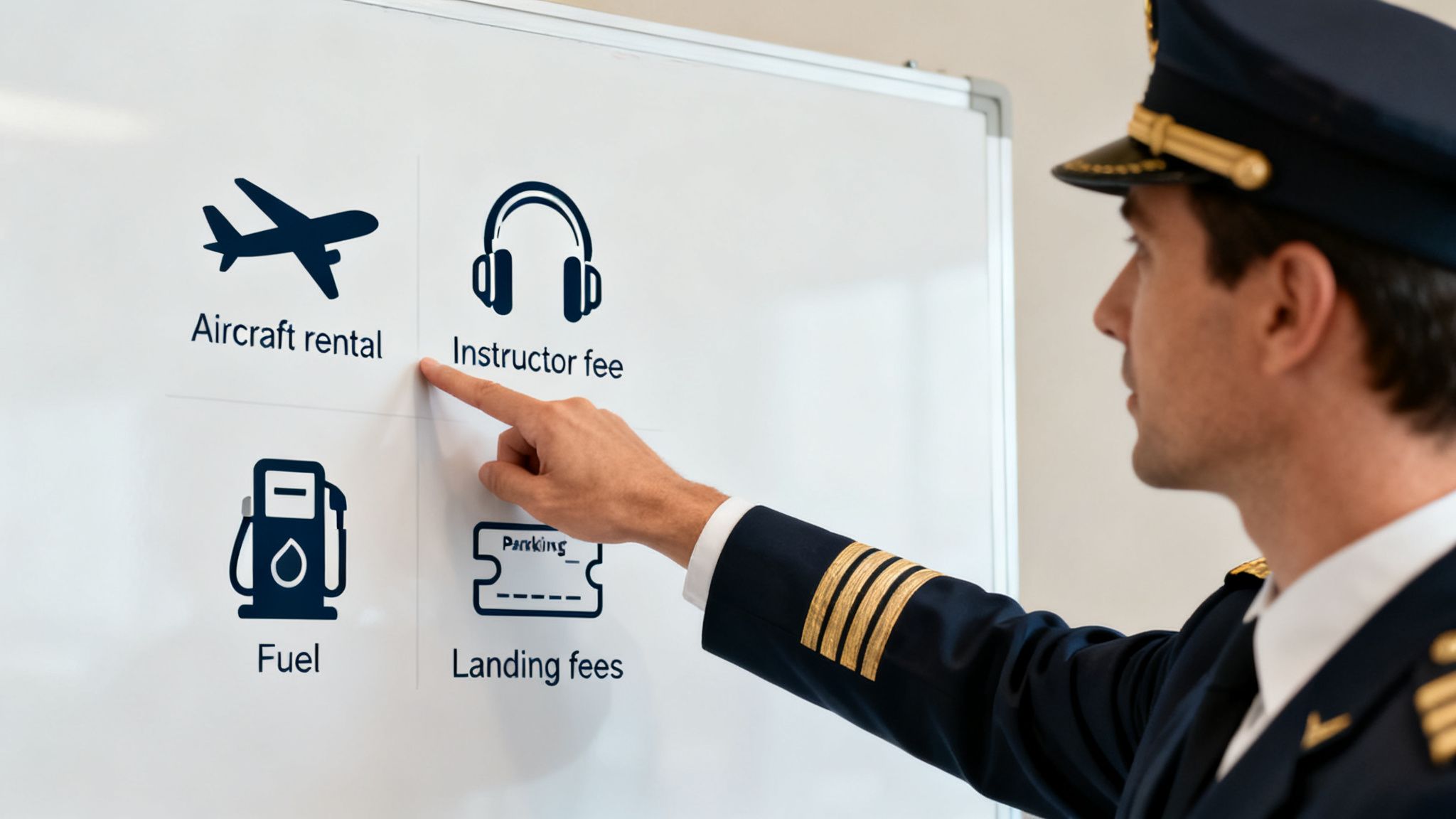
When you see the price for a flying lesson, it’s easy to wonder where all that money goes. That hourly rate isn’t just a number plucked from the sky; it’s a careful sum of several moving parts that all have to work perfectly to get you airborne safely.
Think of it like hiring a high-performance sports car for a track day, complete with a professional racing driver to teach you. You aren’t just paying to use the car. You’re covering the car itself, the expert’s time, the specialist fuel, and even the track fees. Flying works on the same principle, just with a bit more altitude.
Let's pull back the curtain on these costs. It helps you see the real value packed into every hour and feel confident about where your money is going, whether it’s for a one-off thrill or the first step towards a pilot’s licence.
The Aircraft Rental
The biggest slice of the pie, by far, goes towards the aircraft itself. This is your ‘hire car’ for the skies, but the rental fee covers a lot more than just your time at the controls. It’s a comprehensive charge that bundles in all the crucial, and expensive, background costs.
These costs include the plane’s relentless maintenance schedule, its insurance, its hangarage (the equivalent of a very secure parking spot), and the general wear and tear on every single component. Aircraft are subject to incredibly strict rules set by the Civil Aviation Authority (CAA) to guarantee safety, and every hour a plane is in the air, it’s ticking closer to its next expensive check-up.
This is why aircraft flying hours represent the largest expense in UK pilot training, usually making up 60% to 70% of the total cost. For those aiming for a commercial licence, this can mean tens of thousands of pounds spent just on flight hours, a figure that wraps up the plane rental with fuel, maintenance, and insurance. You can get a better sense of how these costs add up by reading about the financial journey of becoming a pilot.
Your Expert Flight Instructor
Next up is the fee for your certified flight instructor. This isn't just a knowledgeable passenger; you’re paying for the time and expertise of a professional pilot whose entire job is to teach you, keep you safe, and build your skills from the ground up.
Their fee doesn't just cover the time you spend in the air together. It also includes the vital ground briefings before you take off and the debrief after you land. This is where you’ll talk through manoeuvres, review safety checks, and get honest feedback on your performance.
Your instructor's guidance is arguably the most critical part of your training. Their experience, teaching style, and ability to build your confidence are fundamental to your progress and enjoyment.
Other Essential Costs
Beyond the two big-ticket items—the plane and the instructor—a few other necessary costs are folded into the price of a flying lesson. They might be smaller, but they're just as essential for keeping a flight school running.
- Fuel Costs: Aviation fuel (Avgas) is worlds away from the stuff you put in your car, and it's significantly more expensive. Most schools build this into their hourly rate, but don’t be surprised if some add a separate fuel surcharge when prices fluctuate.
- Landing Fees: Just like paying for parking, airfields charge a fee every time an aircraft lands. For lessons taking place at your home airfield, this is usually included in the price. If you venture out to practise landings at other airfields, however, you'll likely have to cover those fees yourself.
- Headset and Equipment Use: For your first few lessons, the school will provide all the essential gear you need, like a headset. It's another small but vital component that your lesson fee covers.
Once you understand this structure, you see that the question "how much do flying lessons cost?" has a pretty complex answer. You’re not just paying for a flight; you're investing in a complex, safety-first operation that brings together sophisticated machinery, professional expertise, and all the essential ground support that makes it possible.
Why Do Flying Lesson Prices Vary So Much Across the UK?
When you start shopping around for flying lessons, one of the first things you’ll notice is that prices are all over the map. An hour in the sky over the Yorkshire Dales can cost something quite different to a lesson near the packed airspace of London. This isn't just random pricing; a few key factors are pulling the strings behind the scenes.
Getting your head around these variables is important. It helps you understand why one school’s quote is higher than another and lets you find the right balance between cost, location, and the kind of training you’re after. From the plane you’ll be flying to the airfield’s postcode, let’s break down what really drives the cost.
The Impact of Aircraft Type
By far the biggest influence on the hourly rate is the type of aeroplane you learn in. Think of it like cars: a simple, reliable hatchback is a lot cheaper to run than a high-performance sports car. It’s exactly the same with planes. Most UK flight schools use trusty two-seater trainers, which are the most economical option.
Some schools, however, offer training in larger, four-seater aircraft. These planes are more powerful, often have more sophisticated avionics, and are simply more expensive to buy, maintain, and fuel up. That extra cost is passed straight on to you in the hourly lesson price.
Here’s a quick rundown of why the aircraft choice matters so much:
- Two-Seater Trainers: These are the workhorses of the training world. They’re built to be straightforward, tough, and fuel-efficient, making them the most cost-effective way to learn the ropes.
- Four-Seater Aircraft: While they cost more per hour, learning in a bigger plane can be a smart move if you plan to take family or friends up once you’ve got your licence. The higher price tag reflects greater fuel burn, insurance, and maintenance costs.
Location, Location, Location
It’s an old cliché from the property market, but it’s just as true for aviation. Where a flying school is based plays a huge role in what it charges. An airfield right next to a major city like Manchester or London has far bigger overheads than a quiet, rural strip out in the countryside.
These higher costs cover everything from land rent and business rates to paying staff a competitive wage. What’s more, flying in busy, controlled airspace often means more time spent on the ground waiting for clearance to take off, which can nibble away at your precious flight time. Airfields in more remote spots have less traffic and lower running costs, which usually means better prices for students.
Choosing a school in a less congested area can often mean you get more actual flying for your money, as less of your hour is spent taxiing or holding on the runway.
Instructor Experience and School Reputation
The calibre of your instructor is another piece of the pricing puzzle. A hugely experienced instructor with thousands of flight hours and a string of advanced ratings can naturally command a higher rate than someone who has recently qualified. While every certified instructor in the UK meets rigorous standards, you’re often paying for a deeper well of experience.
This often ties into the school’s overall reputation. A well-established school known for producing excellent pilots may charge a premium for its services. They’ve invested heavily in top-notch facilities, a modern fleet of aircraft, and a team of senior instructors. While it might feel like a bigger initial outlay, learning from seasoned pros can sometimes make your training more efficient, potentially saving you money in the long run by helping you master skills faster.
Finally, how you pay can also make a difference. Many schools offer a discount for block bookings, where you pay upfront for a package of 10 hours or more. This can knock 5% to 10% off the total cost compared to paying for each lesson as you go. It’s a great way to save a bit of cash if you’re committed to seeing it through.
Budgeting for Your Private Pilot's Licence
So, you're ready to move beyond a quick taster flight and commit to earning your wings. Getting a Private Pilot’s Licence (PPL) is a massive life goal, and it's absolutely achievable. But this journey demands more than just passion; it calls for a solid financial plan. To get a real grip on how much flying lessons cost for a full PPL, you need to look way beyond a simple per-hour rate.
Think of it like planning a big road trip across Europe. You wouldn't just budget for petrol, would you? You’d factor in hotels, food, toll roads, and a slush fund for that unexpected flat tyre. Budgeting for your PPL is the same. It's about mapping out every single cost you'll hit on your path to the cockpit, so there are no nasty surprises along the way.
The Core Component: Flight Hours
The biggest chunk of your PPL budget will always, always be the flying hours. The Civil Aviation Authority (CAA) says you need a minimum of 45 hours of flight training to qualify for a PPL. This is a mix of time with your instructor ("dual") and time flying the plane all by yourself ("solo").
Now, here’s the crucial bit: 45 hours is the legal minimum, not the average. Most students need closer to 55 or even 60 hours to get sharp enough for their final skills test. When you're putting your budget together, it's smart to plan for at least 50-55 hours. It just gives you a realistic financial cushion.
The infographic below breaks down what goes into that hourly cost – it’s a mix of the aircraft, the airfield's location, and your instructor's rate.
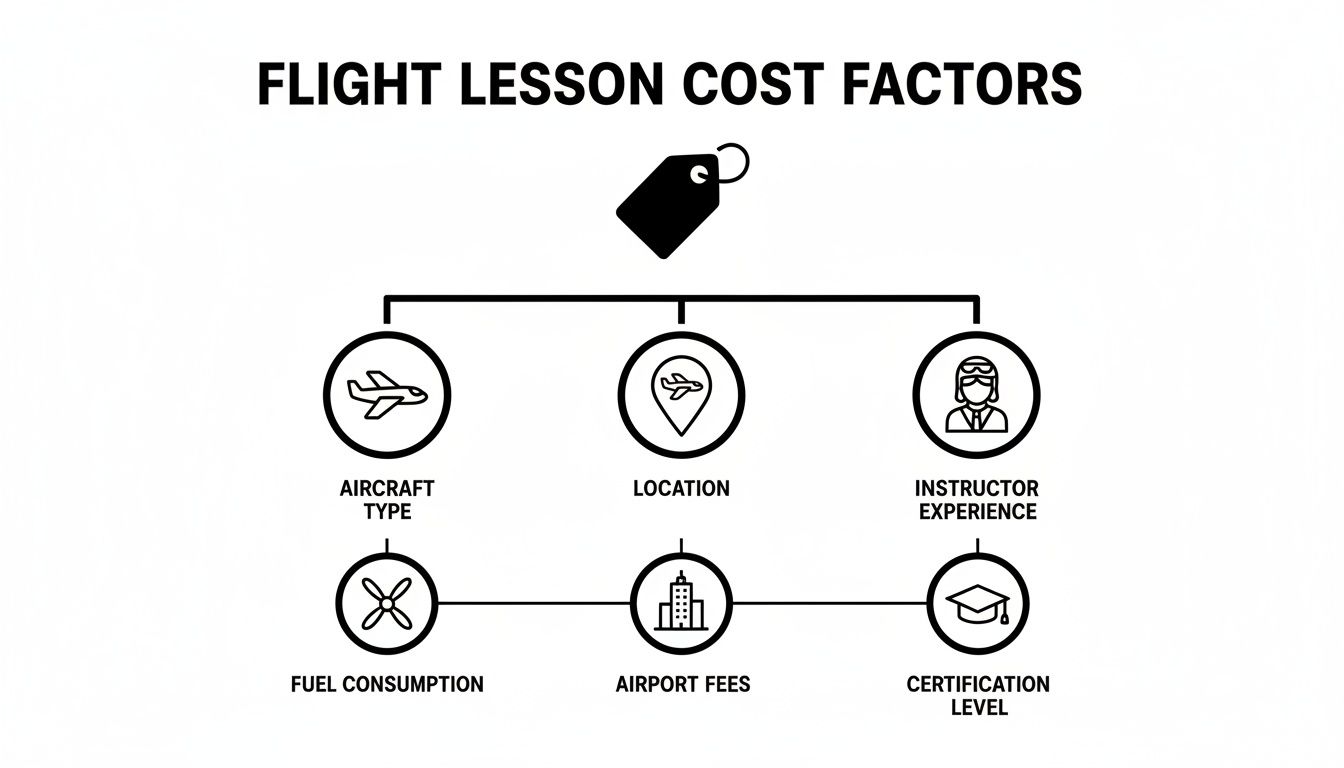
As you can see, it's not just one thing. Each of these elements plays a big part in the final figure you'll pay.
Ground School and Theory Exams
Being a great pilot isn’t just about wrestling with the controls. It's about knowing the theory that makes safe flight possible. Before you can even think about your final flying test, you have to pass nine written theory exams.
The subjects are pretty hefty and include:
- Air Law: The "Highway Code" of the skies.
- Navigation: How to plan a route and not get lost.
- Meteorology: Understanding weather and why it’s the boss.
- Aircraft General Knowledge: The nuts and bolts of your plane.
- Human Performance: Learning how things like stress and tiredness affect you as a pilot.
You’ll need to pay for study materials (books, online courses, or proper classroom lessons) and an exam fee for each of the nine tests. While hitting the books on your own is the cheapest route, many students find a structured ground school is worth its weight in gold.
Essential Gear and Medicals
Before you can fly solo for the first time, you must get a Class 2 Medical Certificate from a CAA-approved Aeromedical Examiner (AME). It's a proper health check to make sure you're fit to be in command of an aircraft, and you’ll need to keep it valid throughout your training.
You'll also need to shell out for some personal kit. Your flight school will lend you a headset for your first few lessons, but pretty much every PPL student buys their own. A decent headset isn't a luxury; it makes communication clearer and protects your hearing, making it a key piece of safety gear. You'll also need things like a flight computer (a special slide rule), a protractor, and up-to-date flight charts.
A realistic PPL budget isn't just a list of costs; it's a financial roadmap. By accounting for every exam fee, medical certificate, and bit of gear, you turn a scary number into a manageable, step-by-step investment in yourself.
The Final Hurdles: Licence and Test Fees
Once your instructor is happy with your progress and signs you off, you’re on the home straight. The final steps are your practical skills test and applying for the licence itself. The skills test is basically your driving test in the sky, carried out by a certified flight examiner. You pay the examiner's fee directly, plus the cost of hiring the aircraft for the test, which usually takes about two hours.
After you pass (and the feeling is incredible!), the last job is to send all your paperwork and the licence application fee to the CAA. Only then do you get that hard-earned Private Pilot’s Licence in your hands.
To give you a clearer picture, here’s a sample breakdown of what the total cost might look like.
Sample Cost Breakdown for a UK Private Pilot's Licence (PPL)
This table outlines the typical expenses you can expect when training for your PPL in the UK. Remember, these are estimates and can vary based on the factors we've discussed.
| Expense Item | Estimated Cost |
|---|---|
| 55 Hours of Flight Training (at ~£220/hr) | £12,100 |
| 9 Written Theory Exams (at ~£35 each) | £315 |
| Ground School & Study Materials | £400 |
| Class 2 Medical Certificate | £200 |
| Headset & Flight Equipment | £350 |
| PPL Skills Test (Examiner Fee) | £250 |
| Aircraft Hire for Skills Test (2 hours) | £440 |
| CAA Licence Application Fee | £201 |
| Total Estimated Cost | £14,256 |
This shows how all the smaller costs stack up to create the final figure. Planning for these from the start is the key to a stress-free training experience.
If you want to get a real feel for what a full lesson is like before committing, a 60-minute aeroplane flying lesson is a brilliant way to see if it’s for you. And as you get deeper into flying, understanding the world of aviation logistics gives you a fascinating insight into the huge industry you're about to join.
Why Trial Flights Are the Perfect Taster Experience
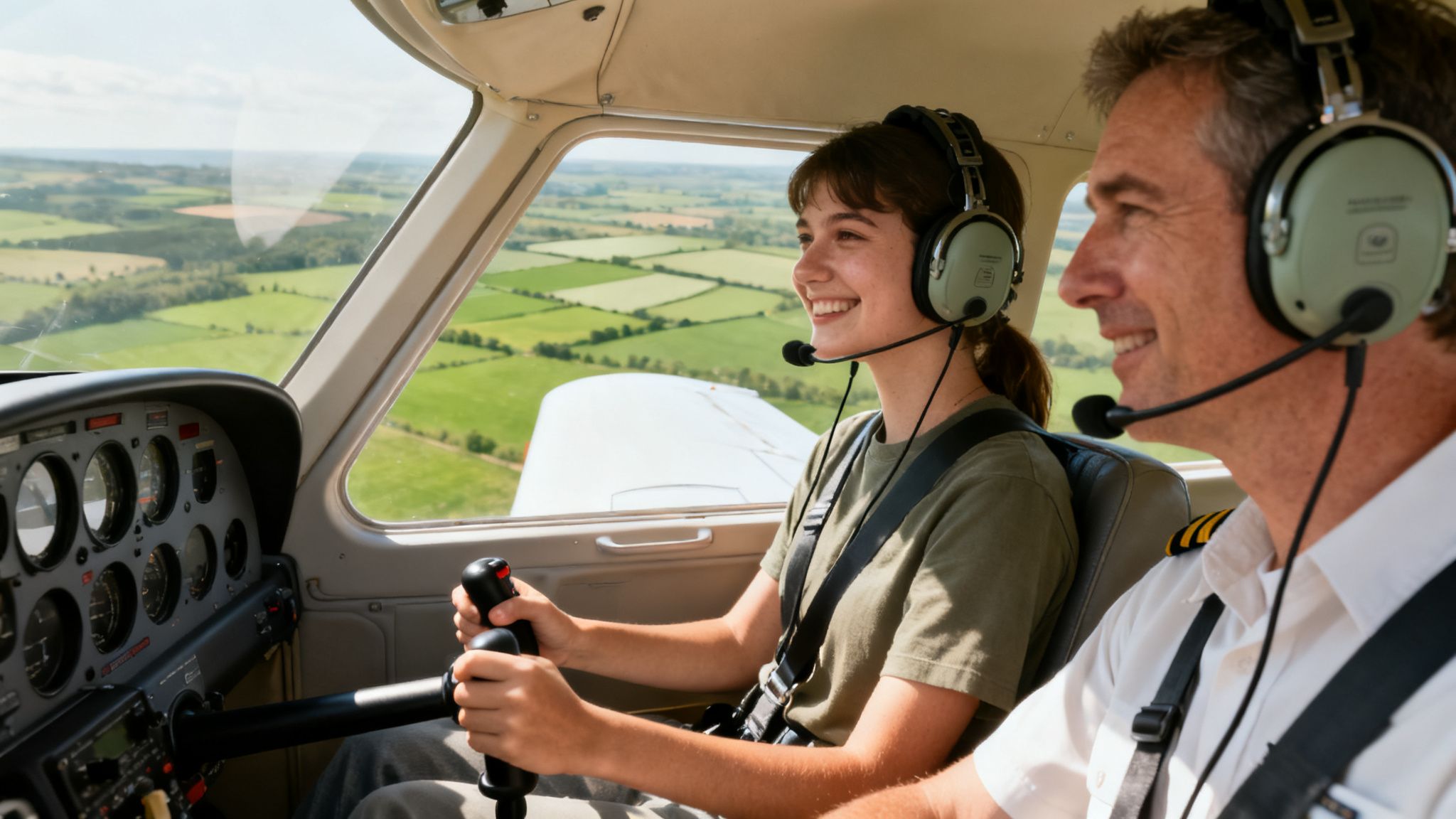
So, you're curious about flying. Should you dive straight in? For most people, a trial flight isn't just the right first step—it's the perfect one. Before you commit thousands of pounds and dozens of hours to a full Private Pilot’s Licence, an introductory flight is the ultimate, low-commitment way to see if it’s truly for you.
Think of it as the ultimate test drive. You wouldn’t buy a car without taking it for a spin, and the same logic absolutely applies to learning to fly. An ‘air experience’ flight gives you a genuine feel for being in the pilot's seat and creates a brilliant memory, all without the pressure of a long-term training programme.
And this isn't some scenic tour where you're just a passenger. From the moment you arrive, you're treated like a student pilot. The whole thing is designed to be both a massive thrill and a proper introduction to what flight training is all about.
What to Expect on Your First Flight
Your experience starts long before the engine does. It begins on the ground with a proper pre-flight briefing from your qualified instructor. This is your chance to get comfortable and ask all those burning questions.
They’ll walk you through the basics of how the aeroplane works, explaining the key controls and what to expect once you’re airborne. You’ll cover the essential safety checks and the plan for your flight, so you feel confident and ready for takeoff. It’s a vital part of the process that really demystifies the whole thing.
Then comes the best part. Once you're safely up in the air and cruising, your instructor will hand the controls over to you. This is the moment it all becomes real. Under their watchful eye, you'll actually get to fly the aircraft yourself—learning how to make gentle turns, climbs, and descents. It’s an incredible feeling of freedom and control.
A trial flight is more than just an activity; it's a core memory in the making. The combination of stunning views, the hum of the engine, and the hands-on experience of controlling an aircraft is something that stays with you forever.
Choosing the Right Taster Experience
Trial flights are brilliant because they're so flexible, designed to fit different budgets and levels of curiosity. They're usually sold by duration, so you can decide just how big you want your first taste of aviation to be.
- 30-Minute Flights: This is the perfect introduction. It’s enough time to get a real feel for the controls and soak up the views without being overwhelming. It also makes for a fantastic gift experience.
- 60-Minute Flights: If you’re already pretty serious about learning, a longer lesson is a great choice. The extra time allows for more in-depth instruction and more practice with basic manoeuvres, giving you a much deeper insight into the training process.
Ultimately, a trial flight is the easiest and most enjoyable way to answer the big questions. Do you love the feeling of being in a small aircraft? Do you enjoy the challenge? It answers all of this without a hefty financial commitment, making it the smartest first step for any aspiring pilot.
Exploring a 30-minute aeroplane flying lesson in a 4-seater aircraft can be a fantastic way to share this amazing experience.
Still Have a Few Questions?
As you get closer to booking that first flight, it’s completely normal for a few last-minute questions to bubble up. Thinking about how much flying lessons cost is more than just the hourly rate; it's about understanding the whole journey. This is where we answer the queries we hear most often from people just like you.
Think of this as your final pre-flight check before you commit. We'll cover everything from your first time flying alone to those sneaky extra costs, making sure you feel totally clued-in and ready for take-off.
How Many Lessons Until I Can Fly Solo?
Going solo for the first time is a massive milestone – a moment every pilot cherishes forever. There’s no magic number of lessons, though. Your progress really depends on your own knack for it, how often you can get in the air, and, of course, the famously fickle British weather.
Typically, most students in the UK are ready to take the controls alone after about 15 to 25 hours of dual instruction with their teacher. Before your instructor even thinks about signing you off, they need to be 100% certain you can handle the aircraft safely through all the basic manoeuvres. That means take-offs, circuits, and especially landings.
You’ll also need to have passed a couple of theory exams and have a valid medical certificate. Trust us, that first solo flight, when it's just you, the plane, and the sky, is an absolutely unforgettable feeling and a huge confidence booster.
Are There Any Hidden Costs I Should Know About?
This is a really important one, particularly if you're budgeting for the full Private Pilot's Licence (PPL). While good flying schools are upfront with their pricing, it’s smart to plan for more than just the hourly flight rate. For trial flights and gift experiences, the price you see is almost always the price you pay, but it never hurts to check about potential fuel surcharges.
When you're saving up for a PPL, you'll want to factor these extras in:
- Equipment: Your biggest single purchase will be a decent headset, which can set you back anywhere from £200 to over £800. It’s non-negotiable for clear communication and protecting your hearing.
- Exam Fees: There are nine written theory exams to pass, and each one costs about £35.
- Landing Fees: Landing at your home airfield is included in your lesson price, but if you fly to other airfields as part of your training, you'll need to pay their landing fees, which can vary.
- Final Test and Licence Fees: You’ll need to pay an examiner for your final skills test (around £200-£250), plus the cost of hiring the aircraft for the test. Once you pass, there's a final CAA licence application fee.
What's the Difference Between a PPL and an LAPL?
Once you start looking into getting a licence, you'll hear two acronyms pop up: the Private Pilot's Licence (PPL) and the Light Aircraft Pilot's Licence (LAPL). The right one for you really boils down to your budget and how ambitious your flying dreams are.
The main difference is in the training hours and what each licence lets you do. A PPL is the more globally recognised qualification, demanding a minimum of 45 flying hours. Once you've got it, and with the right ratings, you can fly almost anywhere in the world.
The LAPL, on the other hand, is often a quicker and cheaper way to get into the air, requiring a minimum of just 30 flying hours. Its privileges are a bit more restricted, though; you're generally limited to flying lighter aircraft within the UK and Europe. For many hobby pilots who just want to enjoy the view over Britain, the LAPL is a fantastic, cost-effective choice.
Choosing between a PPL and an LAPL is a classic case of balancing ambition with budget. The PPL offers greater freedom and global recognition, while the LAPL provides a more accessible and faster path to becoming a qualified pilot for UK-based flying.
Can I Buy a Flying Lesson as a Gift?
Absolutely! A trial flying lesson is genuinely one of the most exciting and memorable gifts you can give anyone. It's the perfect present for someone with a streak of adventure, a fascination with planes, or who just deserves an experience they'll never forget.
Gift vouchers for various flight times are widely available, with 30-minute and 60-minute lessons being the most popular picks. These packages are designed as a complete experience, with a pre-flight safety briefing, a tour of the aircraft's controls, and, of course, plenty of supervised, hands-on time actually flying the plane.
It's an incredible way to mark a big birthday, an anniversary, or any special occasion. You’re not just giving a present; you’re giving someone the chance to see the world from a whole new perspective and a story they’ll tell for the rest of their life.
Ready to give the gift of flight or take the controls yourself? At Activity Superstore, we've curated a fantastic range of flying experiences across the UK, perfect for every budget and ambition. From thrilling trial lessons to introductory flight packages, your adventure in the skies is just a click away. Find your perfect flying lesson on https://www.activitysuperstore.com.